Perimenopause & menopause· 5 min read
Talking with your doctor about hormone therapy
Many women were told hormone therapy was not safe. That idea came from a large study in 2002. Since then, doctors have learned a lot more. Today, hormone therapy is a good choice for many women.
What changed
The 2002 study mostly looked at older women who started hormones many years after menopause. Newer research looked at women who start sooner.
For most healthy women under 60, or within 10 years of their last period, the benefits often outweigh the risks. It can ease hot flashes, night sweats, and sleep problems. It also helps protect your bones.
Every woman is different. Your own health history matters most.
The main types
Hormone therapy comes in a few forms:
- Patches, gels, or sprays you put on your skin.
- Pills you take by mouth.
- Low-dose creams or rings used in the vagina for dryness or bladder issues.
- If you still have a uterus, you also need progesterone to protect its lining.
How to plan your visit
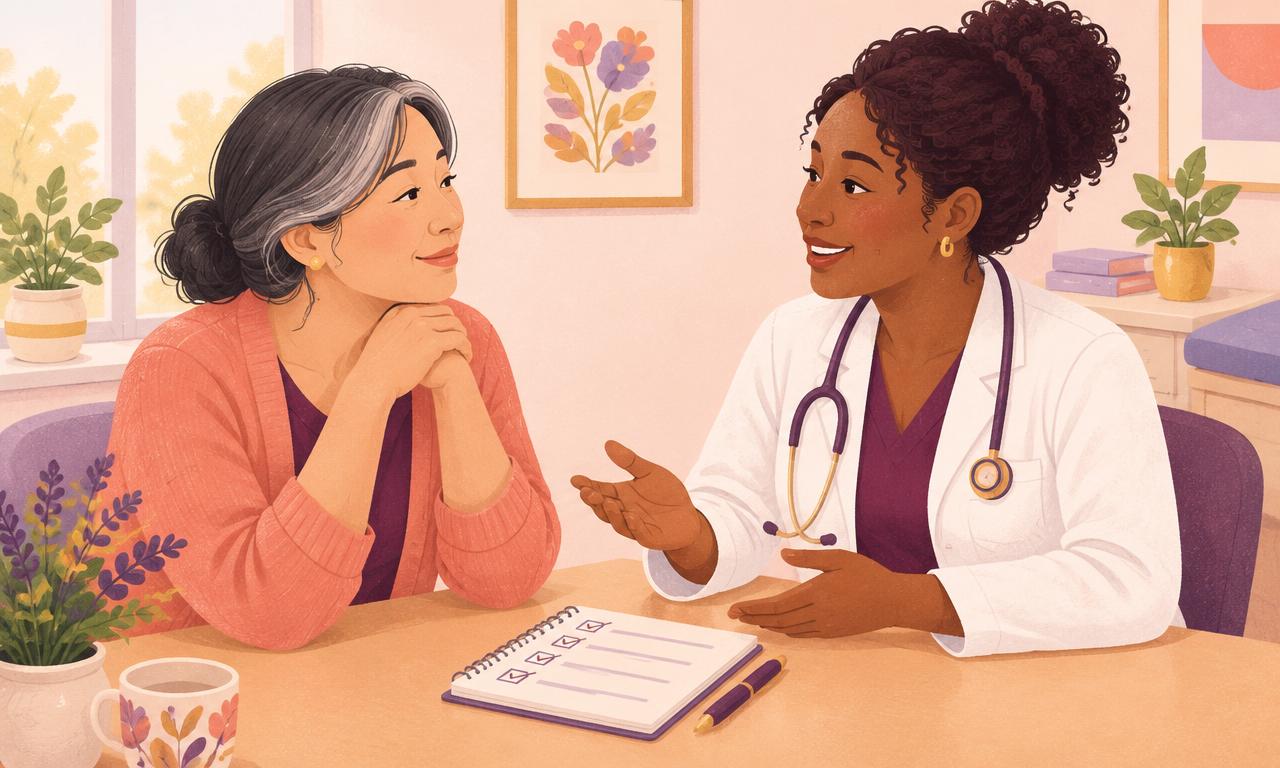
Bring a short list of your symptoms and how they affect your day. Bring your family history, like breast cancer, blood clots, or heart disease.
Most women do not need hormone blood tests to start treatment. Your doctor can usually decide based on your age and symptoms.
If hormones are not right for you, ask about other options. There are non-hormone medicines that can help with hot flashes too.
Questions to ask your doctor
- Am I a good fit for hormone therapy?
- Would a patch or a pill be safer for me?
- What are my options if I cannot take hormones?
Get help right away if
- You have chest pain, a swollen and painful leg, or sudden shortness of breath. Call 911.
- You have new bleeding after a full year with no period.
Want to bring this to your next visit?
Take the 2-minute private check-in. You get a one-page summary to share with your doctor.
Start the free check-inNo account · nothing leaves your device
This article is for learning, not for diagnosis. Always talk with your own doctor about your care.