
Perimenopause & menopause· 4 min read
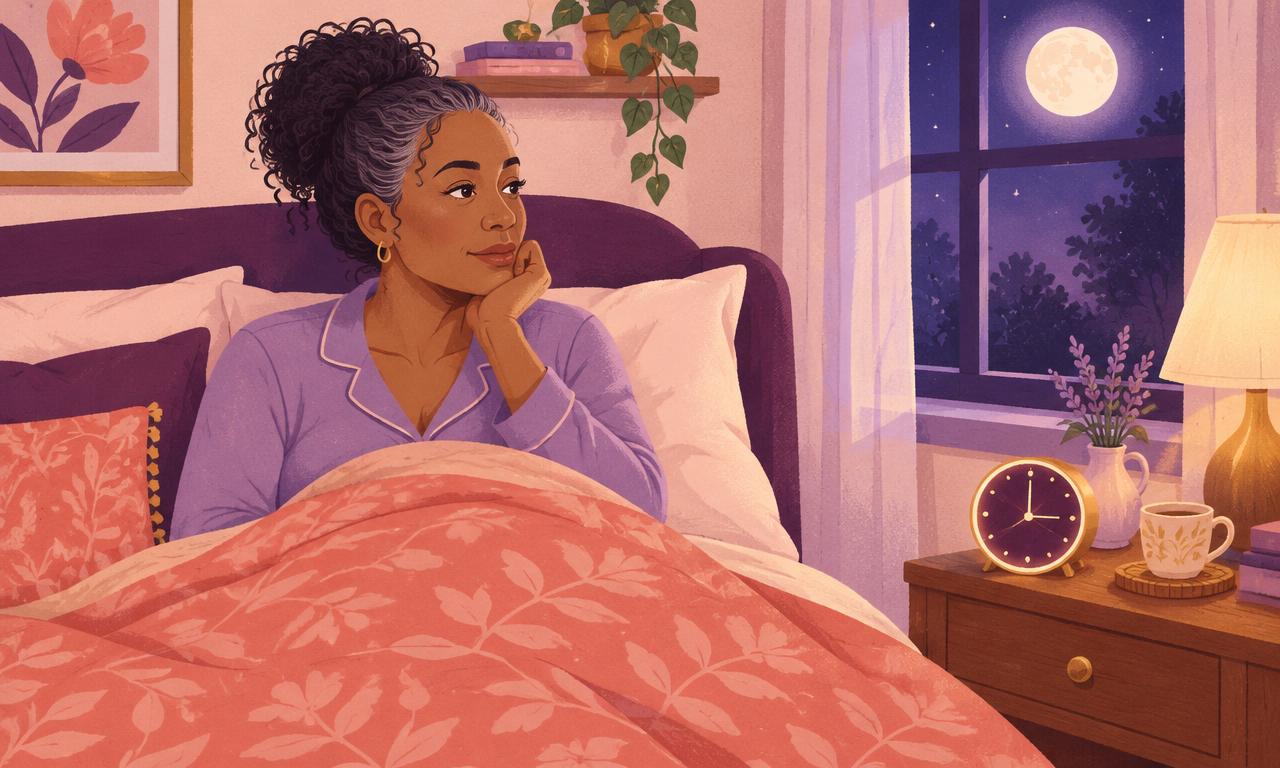
The 3 a.m. wake-up: why sleep changes in your 40s
You fall asleep fine. Then you wake up at 3 a.m. and your mind starts racing. This is one of the most common early signs of perimenopause. It can start years before your periods stop.
Why this happens
In your late 30s and 40s, your body makes less of a hormone called progesterone. Progesterone helps you feel calm and sleepy. When it drops, sleep gets lighter.
Your estrogen also goes up and down more than before. These swings can cause night sweats, a fast heartbeat, or a warm feeling that wakes you up.
Stress hormones also rise in the early morning. Without as much progesterone to calm things down, you may wake up wide awake.
What can help tonight
Small changes can make a real difference. Try one or two at a time.
- Keep your room cool and dark. Use light sheets you can kick off.
- Stop caffeine by noon. Go easy on wine in the evening, since it can wake you later.
- Keep a notepad by the bed. Write down worries so your brain can let them go.
- If you are awake for 20 minutes, get up. Read something calm in dim light, then go back to bed.
- Get morning light and move your body during the day.
When to bring it up with your doctor
If poor sleep is hurting your work, mood, or health, it is worth a visit. There are real treatments. Some women do well with hormone therapy. Others do well with a sleep program called CBT-I.
Your doctor may also check for other causes, like thyroid problems, low iron, or sleep apnea.
Questions to ask your doctor
- Could my sleep changes be from perimenopause?
- Would hormone therapy or a sleep program help me?
- Should we check my thyroid or iron levels?
Get help right away if
- You stop breathing or gasp in your sleep, or a partner notices loud snoring with pauses.
- You feel hopeless or have thoughts of harming yourself. Call or text 988.
Want to bring this to your next visit?
Take the 2-minute private check-in. You get a one-page summary to share with your doctor.
Start the free check-inNo account · nothing leaves your device
This article is for learning, not for diagnosis. Always talk with your own doctor about your care.